Looking for space, privacy, and room to breathe near the Oregon Coast? Buying acreage or a rural home in Beaver can be a great fit, but it often comes with more moving parts than a typical in-town purchase. If you are considering land, a farmhouse, or a home with extra outbuildings and elbow room, this guide will help you focus on the checks that matter most before you write an offer. Let’s dive in.
Why Beaver rural property stands out
Beaver is an unincorporated rural community in Tillamook County, located on Beaver Creek where it meets the Nestucca River. County planning materials describe it as being about 7 miles inland from the Pacific Ocean and 13 miles south of Tillamook. Large lots are common, and much of the housing stock is older.
That mix gives Beaver a different feel from many coastal markets. In the center of the community, some properties may feel more like a small-town purchase. On the edges, you may be looking at a true rural-property decision where access, utilities, land use, and financing can matter just as much as the house itself.
The Beaver Community Plan also notes that the community includes 262 acres total, with residential, commercial, and industrial zoning present. There are relatively few vacant lots, but some larger parcels may still be capable of partition or subdivision. For buyers, that means each property needs to be evaluated on its own facts, not just by how it looks in photos.
Start with the five checks that matter most
When you buy acreage in Beaver, five early questions can save you time, money, and stress:
- How is the property legally accessed?
- What is the water source?
- Is the septic system working, or is septic feasible?
- Is any part of the property in a flood-hazard area?
- Does the property fit your financing plan?
These issues often separate a beautiful rural listing from one that is practical to own and easier to close. If you verify them early, you can make better decisions and avoid expensive surprises later.
Check road access before anything else
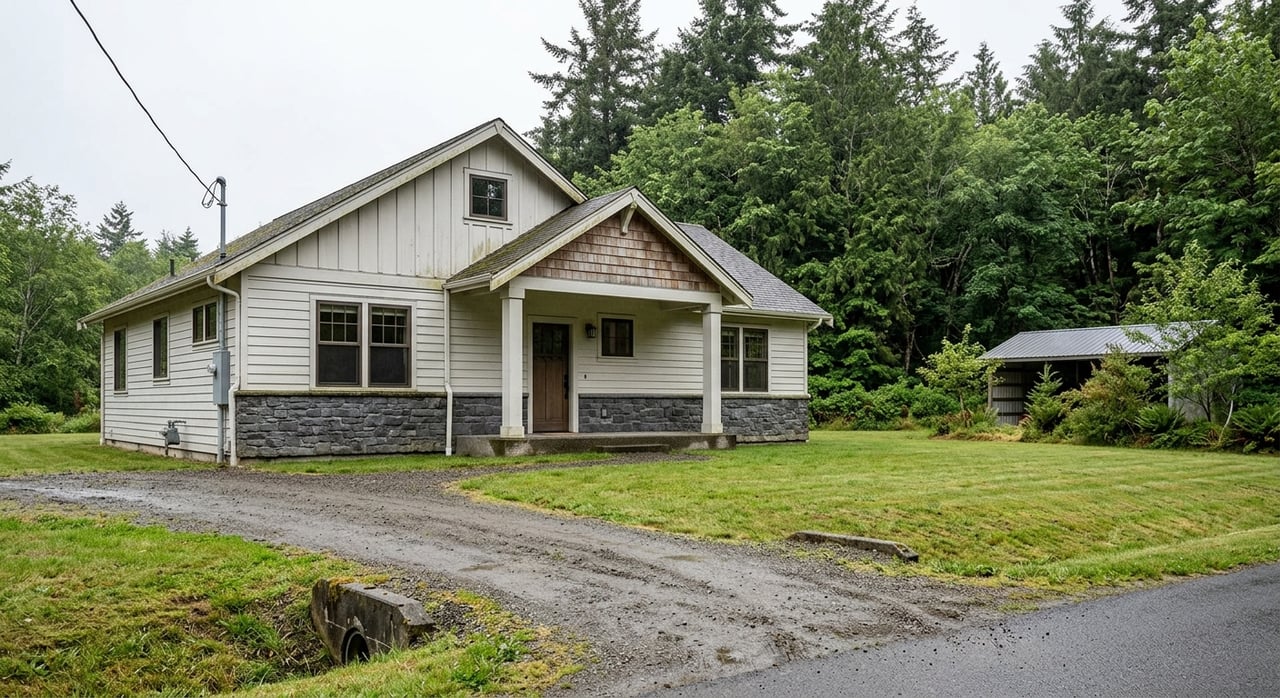
A rural home can appear easy to reach on a map, but access is not always as simple as it looks. Tillamook County maintains 600 county roads covering more than 386 miles, but private roads and state highways are not county roads. That distinction matters because maintenance responsibility and legal access may be very different from one property to the next.
If the home or parcel fronts U.S. Highway 101 or another state highway, Oregon Department of Transportation rules may come into play. ODOT requires a permit for a new access point or a change in use of an existing driveway connection, and the property must have a legal right of access before an approach permit can be issued.
That means you should confirm more than just whether a driveway exists. You want to know who controls the road, whether there is a recorded easement if needed, and whether the current access matches how you plan to use the property.
Rural driveways deserve a closer look
County planning materials for Beaver note that most parcels have good access, but some have moderate to steep slopes. In a wet coastal climate, slope can affect how a driveway performs and whether service vehicles can comfortably reach the home.
Before you move forward, consider practical questions like these:
- Can you get in and out easily in heavy rain?
- Is there enough turning space for delivery or service trucks?
- Does the driveway seem suitable for year-round use?
- If access is shared, is there a clear agreement in place?
Understand water and septic setup
Beaver does not have a community sewer system. County planning materials say the area relies on onsite sewage treatment, which makes septic review a key part of due diligence.
Water can vary by property. Some homes may be served by Beaver Water District, which Oregon Drinking Water Services lists as an active community water system with 184 connections and a population of 600. County utility information says the district serves areas roughly 3 miles north of Beaver and to Nestucca Bend.
Other properties may rely on private wells. The right questions depend on which type of system the property uses.
What to know about septic systems
Tillamook County’s On-Site Sanitation Division administers state septic requirements under contract with DEQ. The county uses test pits and soil-profile review to determine what type of system is needed.
If you are buying a home with an existing septic system, DEQ recommends having it professionally evaluated as part of the transaction. The county also advises buyers to know the location of the tank and drainfield, keep maintenance records, inspect systems every 1 to 2 years, and pump periodically, usually every 3 to 5 years.
On rural property, septic condition can be a major cost factor. A failed or poorly located drainfield can affect both financing and future use of the land.
What to know about wells
If the property uses a domestic well, Oregon Health Authority says the seller must test the well during a real estate transaction for arsenic, nitrate, and coliform bacteria. OHA also says the results must be provided to the buyer and submitted with the required form, and the results are valid for one year.
Vacant land works differently. OHA notes that spring wells, irrigation-only wells, and wells on undeveloped land are exempt from the domestic-well sale testing rule. So if you are buying raw acreage, do not assume water has been fully vetted just because a well is present.
Water rights can matter on larger parcels
If your plans include irrigation, livestock, or another non-domestic use, Oregon Water Resources Department says a water-right permit is generally required for use from most sources in Oregon. Domestic well use up to 15,000 gallons per day is exempt, but larger or different uses may not be.
This is one reason acreage buyers should think beyond the house. If you want pasture, gardening, or hobby-farm use, water rights may matter just as much as the total acreage.
Review zoning and land-use details early
Beaver can include a mix of zoning types depending on where the property sits. Inside the community boundary, county planning materials describe zoning that includes CSFR, CC, and CI. Outside the boundary, Tillamook County’s RR-2 and RR-10 zone is intended for small-acreage residential homesites.
The county ordinance says the RR zone exists for parcels physically capable of homesites on five acres or less, and that farm uses, forest uses, and single-family dwellings are permitted outright. Even so, zoning alone does not answer every question about what you can do on a property.
You should also look at what surrounds the parcel. Tillamook County’s RR ordinance includes a 100-foot separation rule between a residence and adjacent F-1, F, or SFW-20 resource zones unless a barrier or variance applies. That can affect home placement and development potential.
Raw land needs extra verification
If you are buying vacant acreage, it is smart to confirm more than a legal description and tax map. You should ask whether the parcel has practical access, a likely building area, water options, and septic feasibility.
A parcel may look buildable at first glance but still require more study. In Beaver, that is especially true for land near waterways, on sloped ground, or along a highway frontage.
Do not skip floodplain review
Because Beaver sits near Beaver Creek and the Nestucca River, flood review can be important, especially on lower-lying parcels. FEMA identifies the Flood Map Service Center as the official source for flood-hazard mapping, and Tillamook County says hard copies of FEMA maps are available through Community Development.
The county also states that pre-application meetings are required before submitting for a Floodplain Development Permit. For buyers, this matters because floodplain status can affect building plans, insurance costs, and future improvements.
If a property is near water, ask the question early. It is much easier to understand these limits before you commit than after closing.
Ask about power and outage planning
Rural ownership also means thinking about day-to-day resilience. Pacific Power has said that parts of Tillamook County have been included in public safety power shutoff planning during extreme weather.
That does not mean every Beaver property will have the same risk, but it does make it wise to ask practical questions. You may want to know the outage history, whether backup power has been used at the home, and whether the site could support a generator or another contingency plan.
Financing rural homes in Beaver
Not every loan fits every rural property. Acreage, condition, access, and utility setup can all shape what financing options make sense.
USDA loans
USDA’s Section 502 Guaranteed Loan Program is designed for eligible rural areas and offers up to 100% financing for qualified borrowers. USDA also states there is no set acreage limit and says the program can be used to buy, build, rehabilitate, improve, or relocate a dwelling in an eligible rural area.
USDA’s direct-loan program is geared toward very-low- and low-income applicants. USDA’s current area-loan-limit map lists Tillamook County’s direct-loan limit at $324,700 effective February 10, 2026.
VA loans
VA home loans can also be a strong fit for some Beaver acreage purchases. The VA says these loans may be used to buy, build, or improve a home for the borrower’s personal occupancy, generally with no down payment for purchase loans.
The VA also says there is no acreage limit on a VA-guaranteed property. Still, the home must meet VA appraisal and minimum property requirement standards, so condition and utility issues can still matter.
FHA and conventional loans
HUD says an FHA-backed property must be safe, sound, and secure. That means deferred maintenance, septic concerns, or access issues can create challenges even if the land itself is appealing.
Conventional financing can also become more complicated with larger acreage or non-standard features. The CFPB notes that conventional loans may be more difficult for properties with more than 10 acres, agricultural income, or other uncommon characteristics.
The practical takeaway is simple: talk with a lender early. On a rural property, financing should be part of your first-round review, not an afterthought.
Local offices worth knowing
When you buy rural property, local information matters. In Beaver, these are some of the most useful places to start:
- Tillamook County Community Development for planning, building, and onsite wastewater questions
- Beaver Water District for water availability and connection questions
- Tillamook County Road Department for county-road access questions
- OSU Extension Tillamook County for gardens, pasture, soils, and small-scale land stewardship
- Tillamook County Soil and Water Conservation District for land and resource guidance
Having the right local contacts can make a rural transaction smoother. It can also help you understand ownership costs and land-use realities before you buy.
Why local guidance matters in Beaver
Buying acreage and rural homes in Beaver is not just about finding enough land. It is about finding a property that fits how you want to live, what you want to do with the land, and how comfortably you want to maintain it over time.
That is where local experience can make a real difference. When you know the area, the road patterns, the utility questions, and the county process, it becomes easier to spot issues early and keep the transaction moving in the right direction.
If you are considering a rural home, acreage parcel, or raw land in Beaver, a local, practical approach can help you buy with more confidence. If you want help evaluating access, utility setup, or overall fit before you make a move, reach out to Dylan Landolt to schedule a free consultation.
FAQs
What should you verify before buying acreage in Beaver, Oregon?
- The five big items are legal access, water source, septic condition or feasibility, floodplain status, and whether the property fits your financing plan.
How do septic systems work for rural homes in Beaver?
- Beaver does not have a community sewer system, so homes typically rely on onsite sewage treatment, and Tillamook County says septic review depends on soil conditions, system type, and site evaluation.
Do sellers have to test wells during a Beaver home sale?
- If the property uses a domestic well, Oregon Health Authority says the seller must test for arsenic, nitrate, and coliform bacteria during the transaction and provide the results to the buyer.
Can you use a USDA or VA loan to buy a rural home in Beaver?
- In many cases, yes. USDA and VA both state there is no set acreage limit, but the property still needs to meet program eligibility and condition standards.
Why does floodplain review matter for Beaver acreage?
- Beaver is near Beaver Creek and the Nestucca River, so lower parcels may need closer flood-hazard review, which can affect building plans, permits, and ownership costs.